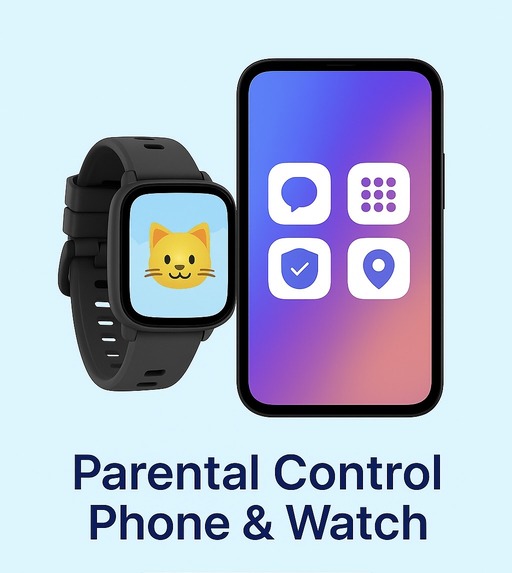
✔ Detects cyberbullying, predators, & threats
✔ Tracks real-time GPS location
✔ Sends instant alerts for risky activity
✔ Blocks explicit, violent, or unsafe websites
✔ Sets screen-time limits and bedtime schedules
✔ Lets parents approve contacts & apps
✔ Keeps data private & secure
children covered by our phone
severe self-harm situations detected
severe bullying situations detected
.png)


.png)
Emily R.
Mom of a 14-year-old
Miranda L.
High School Parent
Sophia T.
Mom of 2 Teens
.png)
7 Screen-Time Myths Parents Still Believe—and What Research Actually Says
Few topics in modern parenting create as much confusion as screen time. One article warns that screens are ruining childhood. Another insists technology is essential for learning. Social media adds its own opinions, often louder than science.
Caught in the middle, parents are left wondering if they’re doing too much—or not enough.
What research now shows is that many common beliefs about kids and screens are simply outdated. The real issue isn’t technology itself. It’s how we misunderstand it.
Let’s look at the screen-time myths parents still hear every day—and what’s actually true.
Myth 1: All Screen Time Is Harmful
This is the belief that fuels the most guilt.
In reality, research no longer treats all screen time as equal. Watching age-appropriate educational content with boundaries is fundamentally different from hours of unfiltered scrolling on adult platforms.
What matters is design and intent. Screens that are calm, limited, and purposeful don’t overwhelm children’s brains. Screens that constantly demand attention do.
That’s why kids using safe smartphones designed for children show far fewer negative effects than those using unrestricted adult devices.
Myth 2: If My Child Has a Phone, Addiction Is Inevitable
This fear causes many parents to delay any phone until it suddenly becomes unavoidable.
But addiction isn’t caused by ownership—it’s caused by exposure to addictive systems. Infinite feeds, autoplay videos, and constant notifications train the brain to seek stimulation.
A parental-controlled phone removes these systems entirely. Without them, children are far less likely to develop compulsive habits. The phone becomes boring—and boredom is healthy.
Myth 3: Monitoring a Child’s Phone Destroys Trust
Many parents worry that using controls sends the message, “I don’t trust you.”
Child psychologists argue the opposite. Children feel safer when adults set clear, consistent boundaries. Unchecked freedom often creates anxiety because kids sense they’re navigating something too big alone.
Parental controls don’t have to mean spying. When used transparently, they communicate care, not suspicion.
Myth 4: Time Limits Alone Solve the Problem
Time limits are helpful—but they’re incomplete.
An hour on a phone designed for adults can be far more overstimulating than three hours on a child-safe device. Algorithms don’t respect timers. They’re built to pull users deeper, faster.
This is why many parents feel like time limits “don’t work.” The environment itself is working against them.
Myth 5: Kids Need Social Media to Fit In
This myth pressures parents into early access they’re uncomfortable with.
Research consistently shows that early social media exposure increases comparison, anxiety, and emotional sensitivity. Kids don’t need social platforms to build friendships—they need communication tools and real-world connection.
Safe smartphones allow kids to stay in touch without placing them inside adult social ecosystems before they’re ready.
Myth 6: Screens Are the Reason Kids Can’t Focus Anymore
Screens don’t automatically destroy focus. Poorly designed digital experiences do.
When kids use devices that encourage constant switching, attention suffers. When distractions are removed, focus often returns surprisingly quickly.
Studies show that children using structured, limited devices demonstrate improved concentration over time—especially when screen use follows predictable routines.
Myth 7: Struggling With Screen Time Means Bad Parenting
This may be the most damaging myth of all.
Modern parents are navigating technology that changes faster than any generation before them. Struggles are not a sign of failure—they’re a sign that tools have outpaced guidance.
Parents who shift from reactionary rules to intentional digital structure report lower stress, fewer arguments, and healthier relationships with technology.
What the Myths Get Wrong
Most screen-time myths treat technology as a moral issue instead of a design issue.
Kids don’t need perfect parents. They need environments that match their developmental stage. When devices are built with children in mind, many screen-related problems soften—or disappear entirely.
A More Realistic Way Forward
The healthiest families aren’t the ones banning screens entirely or allowing unlimited access. They’re the ones choosing tools that do some of the work for them.
By starting with parental-controlled phones and safe smartphones for kids, parents reduce conflict, protect mental health, and create space for kids to grow into technology—rather than be overwhelmed by it.
The conversation about screen time is changing. And that’s good news for everyone.