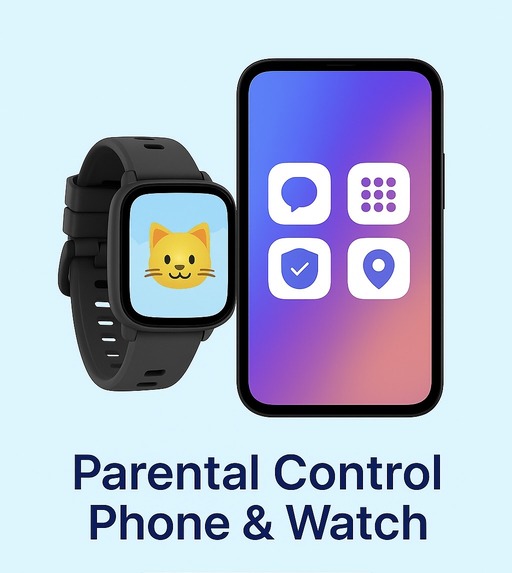
✔ Detects cyberbullying, predators, & threats
✔ Tracks real-time GPS location
✔ Sends instant alerts for risky activity
✔ Blocks explicit, violent, or unsafe websites
✔ Sets screen-time limits and bedtime schedules
✔ Lets parents approve contacts & apps
✔ Keeps data private & secure
📖 Growing Up Digital: Why the First Phone Matters More Than You Think
A Generation Born With Screens
Today’s kids are the first to grow up in homes where smartphones are everywhere. From toddlers swiping on YouTube to teens sending late-night texts, it’s no surprise that many parents feel torn: when is the right time to give a child their first phone?
The answer isn’t about age alone. It’s about choosing the right kind of device — one that gives freedom without overwhelming them.
The First Phone Sets the Tone
Think of a first phone like a first set of car keys. If you hand a 16-year-old a race car with no seat belts, you wouldn’t expect a smooth ride. The same goes for giving a full smartphone to a 10 year old.
Starting with a safe starter phone for kids builds healthy habits early. Instead of endless TikTok scrolling, children learn that phones are tools for staying connected, not for losing hours online.
Surveys reveal that:
- 53% of U.S. children own a smartphone by age 11 (Common Sense Media, 2021).
- Nearly 40% of parents say they regret giving unrestricted smartphones too early.
- Teens who limit screen time to under 3 hours daily report better grades and stronger friendships (JAMA Pediatrics, 2023).
The first phone can either be a stepping stone to responsibility — or a gateway to distraction and anxiety.
Stories From Real Parents
Emma, a mother of three, says she bought her 12-year-old a flip phone instead of an iPhone. “At first he complained,” she admitted. “But then he realized he could text his friends, call us anytime, and not feel pressure about likes or followers. He was actually relieved.”
Stories like Emma’s are becoming more common, as families turn to phones for tweens without social media as a healthier compromise.
Why Not Just Say “No Phone”?
Some parents avoid the problem by delaying phones altogether. While that works for some families, others find that kids without phones feel left out of group chats, team updates, and school reminders. The challenge isn’t removing technology — it’s introducing it in a controlled way.
Features That Make a First Phone Safe
If you’re considering your child’s first phone, look for:
- No app store access → blocks harmful downloads.
- Text + call only → keeps communication simple.
- GPS tracking → offers peace of mind for parents.
- Parental dashboards → lets adults set limits without constant battles.
Phones like these are practical teen phone addiction solutions — cutting off the biggest triggers before they start.
Looking Ahead
The debate about kids and technology isn’t going away. But one thing is clear: the first phone is a turning point. Families that start with boundaries in place give children a better chance to grow up balanced, connected, and safe.
If you’re unsure what’s right for your family, start small. A limited feature phone for young children can give independence without the downsides of social media overload. Think of it as training wheels for digital life.