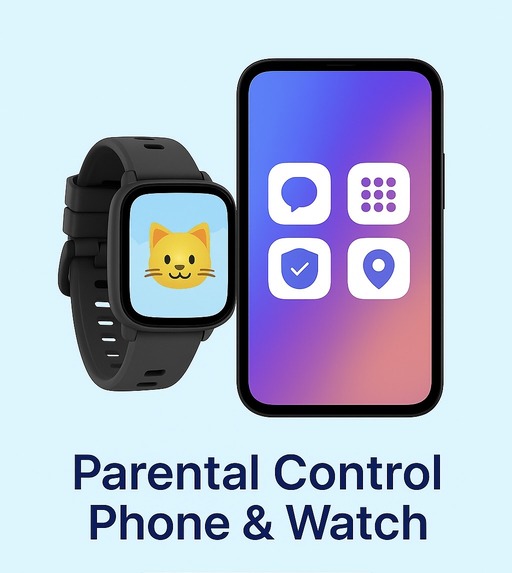
✔ Detects cyberbullying, predators, & threats
✔ Tracks real-time GPS location
✔ Sends instant alerts for risky activity
✔ Blocks explicit, violent, or unsafe websites
✔ Sets screen-time limits and bedtime schedules
✔ Lets parents approve contacts & apps
✔ Keeps data private & secure
7 Myths About Kids’ Phones That Are Hurting Families — And the Truth Every Parent Needs to Hear
Myth 1: “All screen time is bad for kids.”
Reality: Not all screen time is created equal. There’s a major difference between passive binge-watching and active, educational, or communicative use. When used intentionally—with limits—phones can support learning, creativity, and connection. It’s not about no screen time, but balanced screen time.
Myth 2: “My child is too young for a phone.”
Reality: It depends on the purpose and the device. A simplified phone or smartwatch designed specifically for kids as young as 7 or 8 can provide essential safety features—like GPS tracking and emergency calls—without opening the door to harmful apps or distractions. Age isn’t the only factor—maturity and structure matter more.
Myth 3: “Parental controls are invasive and break trust.”
Reality: Good parental controls don’t invade—they guide. Modern tools allow for real-time alerts without spying. Features like keyword monitoring for bullying, violence, or explicit content can keep you informed without reading every message. Think of it like a seatbelt—not a cage.
Myth 4: “Giving a phone means losing control.”
Reality: Giving a phone without rules leads to chaos. But handing over a device with clear expectations, usage hours, content filters, and check-ins actually gives parents more control—while teaching kids accountability. The goal isn’t to monitor 24/7, it’s to co-manage digital growth.
Myth 5: “Social media is just part of growing up now.”
Reality: While social apps are popular, they’re also proven sources of anxiety, comparison, and harmful content. Most platforms aren’t even legally designed for kids under 13, and many experts recommend delaying social media access until at least 14. You don’t have to say no forever—but you can say “not yet.”
Myth 6: “If I trust my kid, I don’t need restrictions.”
Reality: Trust isn’t the issue—temptation is. Even the most well-behaved children can get overwhelmed by addictive games, peer pressure, or mature content. Giving kids safe limits isn’t about suspicion—it’s about support. Just like you'd set curfews, you also set digital boundaries.
Myth 7: “My child won’t learn responsibility if I manage their tech.”
Reality: Responsibility doesn’t come from throwing kids into the deep end. It comes from guided practice. A child-safe phone with limited features lets them learn to manage time, communication, and self-regulation in age-appropriate steps. Just like you wouldn’t hand over car keys without practice, don’t hand over full-tech freedom without coaching.
There’s no perfect way to introduce phones into a child’s life—but believing the wrong things can lead to real harm. It’s time to shift from fear-based myths to informed action. Choosing the right device, setting smart rules, and staying involved (without spying) helps your child thrive in the digital world—while giving you peace of mind in the real one.