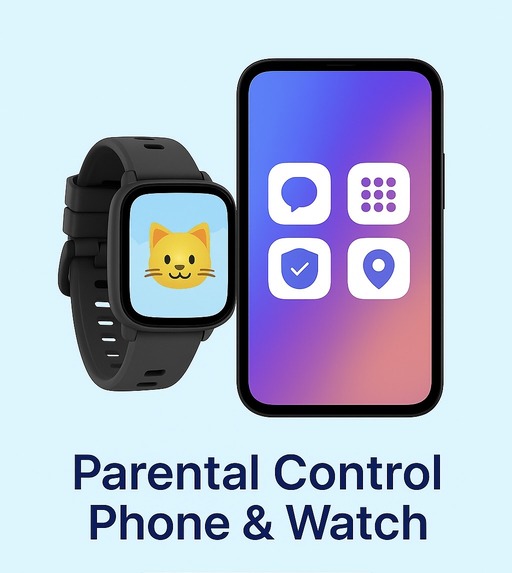
✔ Detects cyberbullying, predators, & threats
✔ Tracks real-time GPS location
✔ Sends instant alerts for risky activity
✔ Blocks explicit, violent, or unsafe websites
✔ Sets screen-time limits and bedtime schedules
✔ Lets parents approve contacts & apps
✔ Keeps data private & secure
How Children’s Brains Respond to Phones — And Why Control Matters More Than Time Limits
When parents talk about kids and phones, the conversation usually revolves around screen time. How many hours is too many? When should devices be turned off? What limits are healthy?
But psychologists are increasingly pointing out a more important question: what kind of access do children have, not just how long they use it.
Children’s brains are still developing the ability to regulate impulses, manage emotions, and resist immediate rewards. These skills don’t fully mature until late adolescence. Phones, however, are built to encourage rapid interaction, novelty, and emotional stimulation.
This mismatch creates stress — not just for kids, but for families.
Why Young Brains Struggle With Open Access
From a psychological standpoint, children are highly sensitive to:
- Rewards and novelty
- Social feedback
- Instant gratification
Notifications, messages, and digital content activate reward pathways in the brain. For adults, this stimulation can be managed. For children, it can quickly overwhelm emotional regulation systems.
This often leads to:
- Mood swings
- Difficulty stopping usage
- Frustration when access is removed
- Heightened emotional reactions
These responses aren’t signs of addiction — they are signs of developmental overload.
Why Time Limits Alone Often Fail
Many parents rely on screen-time limits to manage phone use. While limits can help, they don’t address the underlying issue: unfiltered access.
A child with unrestricted apps, internet, and social platforms may still experience emotional overload — even with limited daily usage.
Psychologists emphasize that predictable structure reduces stress. When boundaries are clear and consistent, children feel safer and more in control.
This is why devices designed with built-in limitations are often more effective than devices that rely on constant supervision.
How Structured Phones Support Emotional Growth
A child-safe phone removes high-stimulation features by default. Without social media, endless scrolling, or algorithm-driven content, the phone becomes emotionally neutral.
Children learn:
- Phones are tools, not rewards
- Communication has purpose
- Downtime doesn’t need digital stimulation
Over time, this supports:
- Better emotional regulation
- Improved focus
- Healthier independence
Parents also benefit. Instead of constantly enforcing rules, they can focus on guidance and connection.
Building Self-Control Gradually
Psychology supports gradual exposure to responsibility. Children learn best when freedom increases alongside maturity.
Starting with a structured device allows children to practice self-control in a supportive environment — before being exposed to higher-risk platforms.
This approach isn’t restrictive. It’s developmentally aligned.